

Yeah, Pebble is so memorable to me that it deserves an individual page to record its stories along with me.
It all started with that video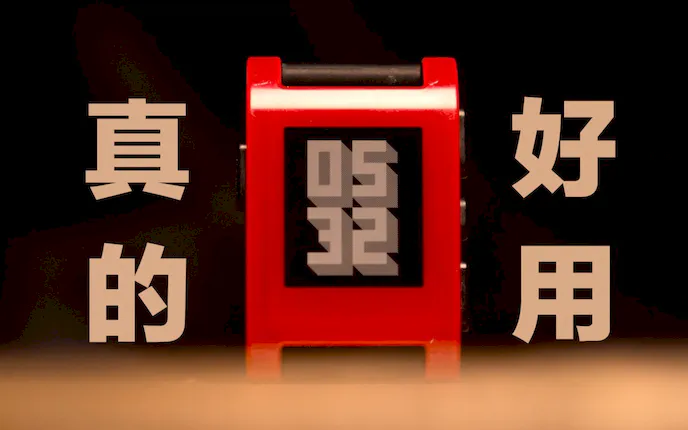 , which was short, but still made Pebble less obscure. Pebble attracted me in every aspect: its smooth animations, its button-based interaction design, its e-paper screen which never turned off; but those were not enough though. As a student of junior high school, a boy rarely got his phone due to the restriction from his mother, I was thirsty for something to entertain my boring school life. From that video I knew that Pebble was able to install apps. You know, do not try to trifle humans’ eager for games. Anything that can be programmed can be turned into a gaming device, whether it is a CASIO calculator or a Mi Band, and Pebble is also included obviously.
After a long hunt I found a merchant selling unboxed new Pebbles — Pebble Time, which had got e-paper screens that displayed up to 64 colours rather than the monochrome on Pebble and Pebble Steel. I didn’t trust Pebble Time Round then. The community-driven nature that Pebble was born with made me sceptical about the compatibility between the round screen and the apps. Also, the screen of the Round was so telescopic, and the bezel was terribly thick. It couldn’t be a perfect gaming console for me then.
In fact, the compatibility between them was just right.
If there was any other reason that Pebble attracted me, I’d say it’s unique, not just unique among those watches my peers were wearing, but among all the wearables I’d ever seen, a brand new and unique experience.
Anyway I got one finally. I got about ¥400 from my grandma at a dinner one day and no sooner had I paid than I got the money. I dared not to tell my mum how much it was them. It was a large amount of money, not just at that moment, but I’ve set my mind.
I bought a black one. Do not ask why I didn’t pick the white one. Of course I preferred the white ones but nobody was selling it then.
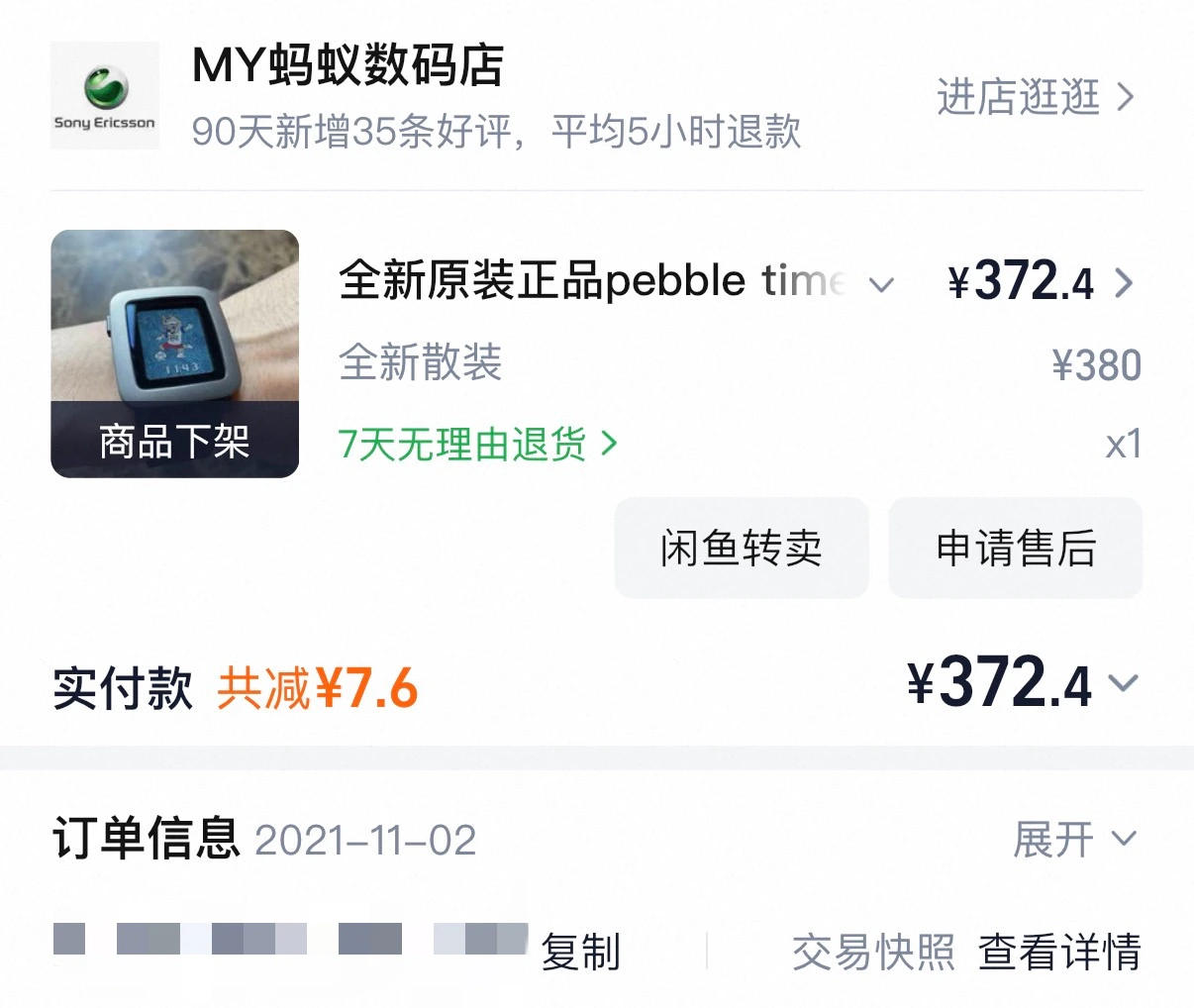
A few days later I got my Pebble. According to the description, it was nearly new, and so was it, at least it looked perfect without scratches and well maintained.
Following the instructions from the merchant I installed Pebble app on my mother’s Android phone. The merchant didn’t tell me about Rebble — after all not all of the customers were willing to visit a strange English site and register a strange account they’d never heard of before.
Of course to download apps in a browser and add them locally was a complicated progress, and could even cause errors. In the first week I downloaded almost every app I could found and tried them out. Most of them were useless actually, and some of them even had some errors: some lacked icon resources, some cannot access to Timeline, some had got their servers down. At last I just installed some essential tools — Timer, Stopwatch, Calendar, Calculator and Compass. Most of the calculators on pebble used gyroscope to detect the user’s motion to move the cursor to select and press numbers, except for this one that uses the tree buttons on the right to add value, switch mode and add digits/point. That meant it could be used without looking at it and struggle with the cursor running here and there. It has got a great idea though I used a real calculator. You couldn’t just sit there and pressing buttons just for a simple calculation.
And then the games. Yeah, the games, that was the most important part. Pebble had got hundreds of games in its app store. And just like the ordinary apps, most of them were of no fun in many reasons, maybe restricted by the e-paper display, the buttons-only control, or the tiny screen.
Certainly there were lots of excellent games, too. But the game impressed me most was not a good game in my judgement: Pixel Miner. I couldn’t understand why such a boring game could be one of the top 10 games in the store: You player launched the game and the little miner began to dig and your pixel amount increased.
Yeah that was all you need to do. Then you could leave it in the background and come back later. The miner might found some treasures like diamonds or old boots and you could sell them in the shop — to hire more miners and buy fancier facilities and … dig faster. And no more than two weeks everything in the shop would be sold out and the whole application would become a dull animation player.
Who on earth would enjoy that? Comparing to the Tetris and 2048 it felt less like a true game.
Writing these down, I glance at the Pebble on my wrist and suddenly realise that in fact few people will play games on such a device seriously. Yeah creative geeks do turn anything into a gaming device, but that doesn’t mean that their games can break through the barriers brought by the physical restrictions from the device itself. Pebble is simply a watch with a ‘light-weighted’ belief and maybe none of its inventors had ever considered about its gaming function seriously, too. They might expected there would be games but didn’t think about it too much. I’m not a kids lacking entertainment any longer. To me as an adult, a university student with all kinds of devices I need, a Timeline allows me to visit viewing the upcoming events with only a single click is much more appealing than a true fun game on my watch. Kids are never the customers as it is always the parents who pay for all those gadgets their kids want.
Soon I deleted it. There were some other games anyway. Fitcat, a virtual petting game that tracks your steps in the background and converts your step statistics into coins to feed a cat and buy new street scenes. The kitty even walks on the streets in its own world when you are walking; Pebblemon, a fanmade Pokémon game, where you can explore and collect up to 251 Pokémon. I was totally amazed by such a mini but vivid pixel world created by its genius developer, and the changelog shows that it was initially released in 2021 even if it had been nearly years since Pebble was sold to Fitbit. After a couple of necessary updates the developer seemed to give up Pebble but four years later in 2025 when Eric had just announced the revival of Pebble new updates emerged again. Tiny Bird, a Pebble version of Flappy Bird but is much harder since the gaps between the two sewers are narrower than than usual so I hardly played it. What fascinated me most was Flood, start from the up-left corner and select the right colour to fill and connect the other pixels with same colour and finally flood the how board in 26 steps at most, simple but fun.
Has it entertained my school life? Well, maybe not really since I don’t quite remember.
One third of our county was on the slope of a hill to the north, and our school was on the slope too, among old houses and alleys. Everyday after school we a gang of four boys went down along the alley together, chattering and even buying some snacks — or what grownups called ‘junk food’ — and our parents would wait for us on its end. There was game on my Pebble, Ledge Climber, which allowed you tilt your watch and make the ball on the screen move left and right and then bounce and jump to a higher pedal when you hit one. One of us, the boy whose seat was in front of me, was deep addicted since he found it on my Pebble and asked often if I could lend it to him to play those days. Of course I won’t decline that. But I was worried if his grade dropped since he was a extraordinary student in all subjects, a genius. Oh my, would this game ruin him? What if his grades dropped? Would I be blamed? Thank goodness he didn’t, obviously. Soon his interest was worn off. It was just a mini game after all.
Gaming could be my initial